
Detective Ito’s partner is missing. It’s a stressful situation made much worse by how close the detective is with her partner in law enforcement, as well as the strange, almost supernatural situation surrounding his disappearance. How should Ito handle it? With calm professionalism, ignoring her feelings? Driven by her passion to extreme, dangerous lengths? And what of the nature of the impossible things she sees?
Tokyo Dark lets players explore all of these possibilities through a narrative that shifts based on their actions, doing so by taking some inspiration from roleplaying games and the open solutions they offer to gameplay blocks.
"Detective Ito is in many way is on the fringes of society in Tokyo Dark. This allowed us to bring players into the world as an outsider and let them develop Ito's character through their choices. We think it is more interesting to see 'how' players approach blocking situations, rather that the more traditional gameplay approach of 'if' a player can solve a situation / puzzle etc.," says Jon Williams, creative director at Cherrymochi, developers of Tokyo Dark.
The complex situation Ito is in could lead to many different mental states and approaches to solving the crime, which lead the studio to allow players to make their own decisions on how to progress the story, creating Ito’s character and motivation through their own approach to solving the mystery. Using their own SPIN system, which tracks Sanity, Professionalism, Investigation, and Neurosis, it could look at how players want to deal with each situation, letting them create a character based on how they choose to move forward.
"These ideas as well as our love of Lovecraft soon lead to mental well being becoming a core theme of Tokyo Dark," says Williams

How, not if
"We're big fans of the Call of Cthullu tabletop game. Tracking Sanity, Professionalism, Investigation and Neurosis (SPIN) came directly from our experiences with many forms of tabletop role playing."
That shift from asking how a player would choose to get through a situation, rather than if they’re able to find the ‘right’ solution to a given block in play, formed the core idea of Tokyo Dark: the SPIN system. This, partially, drew from another game and mythos that also focused on a fluctuating mental state.
"We're showing our love of Lovecraft a bit here," says Williams. "We're big fans of the Call of Cthullu tabletop role playing game. Tracking Sanity, Professionalism, Investigation and Neurosis (SPIN) came directly from our experiences with many forms of tabletop role playing."
Like the roleplaying game, Tokyo Dark would give players a situation, then open things up for the players to come up with a creative means of solving it. This is how most roleplaying games handle situations, and almost anyone who’s every rolled dice can likely recall a moment when something absolutely surprising worked in a strange situation. Perhaps diplomacy worked on an orc horde, or pretending to be a demon’s mother helped deter a lesser beast from attacking. In roleplaying games, it’s about giving players interesting situations, then letting them figure out a way through them that tells all a little something about their character.
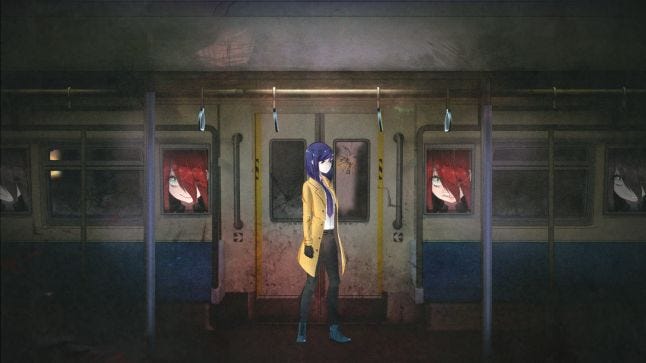
It’s this kind of roleplaying thinking that lead to Tokyo Dark being a bit more open with how it plays. Rather than block players off if they cannot find the single correct solution to a blocking situation, as many adventure games have, Tokyo Dark would be more about seeing what the player chose to do out of several potential solutions, then dictate the story and character arc from those decisions.
"I don't think it's the perfect way of tracking a character's mental state at all!" says Williams. "But it's a fun pulpy way of tracking values for player actions with a snappy acronym. We settled on these four attributes as they seemed the most relevant to our story without becoming too granular."
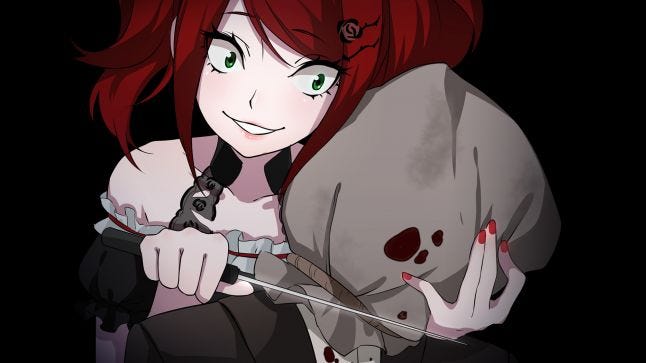
Branching characters
"Many scenes have multiple ways they can play out depending on your SPIN attribute values."
For this to work, Tokyo Dark’s many problems had to have multiple solutions. Players would need to be able to find different ways out of a given block, even if it would require some legwork to find them. Players would need to think and act like a professional if that was the character they felt Ito had, or they could let their emotions run wild and tackle the game with whatever panicked solution first showed itself. Each situation needed various routes to let players explore who they wanted Ito to be. While this can be easy in a tabletop roleplaying game with live overseeing, that can be much harder to capture in an unsupervised video game.
To accomplish this, each situation had to have various ways of solving them. Not only this, but a way of coaxing a continuous character arc based on the actions the player had taken before, rather than letting players choose things willy-nilly. "We wrote sequences with SPIN in mind," says Williams. "So rather than apply SPIN after the fact, we wrote it in from the start always asking; ‘How would a professional Ito deal with this situation?’, ‘What would a crazy Ito do here?’"
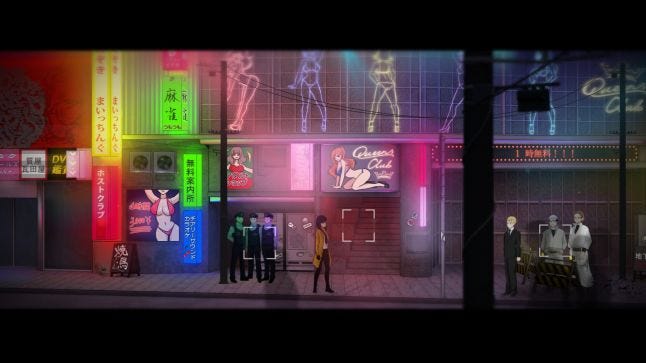
By looking at each situation from these four perspectives, it helped the developers at Cherrymochi give a different puzzle solving spin on each segment. If an offending lock was in the way, players could shoot it off or seek out help opening it. They could threaten a fellow officer to get information they needed, or learn some information about them through detective work and leverage that against them. Every situation had these various routes past them.
No tags.