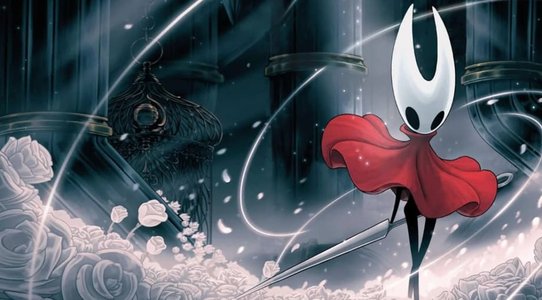

Wizard of Legend is a roguelike dungeon crawler where players will be flinging a lot of spells around.
Gone is the slow-moving, bearded mage flipping through a spellbook and slowly, carefully firing magics. Instead, players whip around firing multiple mapped abilities drawn from a large list of varied spells, using them in their own custom combos and playstyles to keep enemies dazed and overwhelmed.
“From the start we’ve always had a pretty diverse pool of spell ideas that we categorized into different playstyles," says Dahoon Lee, programmer and designer for Wizard of Legend.
"We were looking to move away from the traditional wizard archetype seen in most games and wanted a wide variety of spells that ranged anywhere from the up close and personal style of a traditional melee class, to a more laid back management style of a minion master.”
Designing various spells to work during fast-paced combat, to be applicable in various situations, to be used in combinations with other spells that can create special combos, and used by multiple players to create cooperative combos, meant a lot of design work for Lee and Bundy Kim, who together make up Wizard of Legend developer Contingent99.
To pull it off, the pair had to take each spell idea through complex tests to see if it played well, worked in multiple ways, and made players feel great using it. All spells had to meet this set of rules the developers had set up, and by sticking to them, they created a strong game with multiple magic styles to work with.
Spelltesting
To make players feel like powerful wizards, Wizard of Legend needed some powerful spells that worked in interesting ways. As such, the developers at Contingent99 had some specific rules in place for picking out magics and their effects.
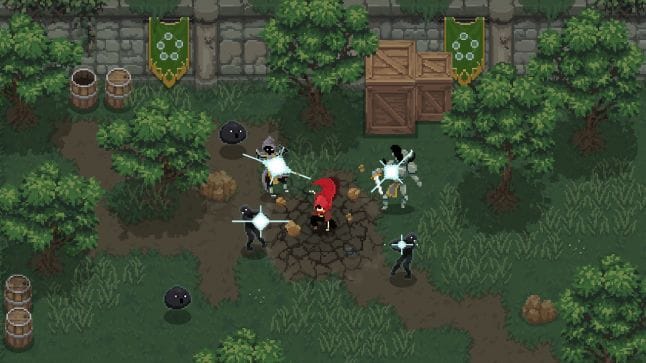
“The first rule that we had for spells was that they needed to feel good to use, in that we would feel like an awesome wizard when using it," says Lee. "The next was that they had to be effective in most situations and be an excellent choice in at least one specific situation that we could expect the player to find themselves in. We also did our best to avoid having any two spells overlap too much in functionality. Other than this, we stayed pretty open about what defined a spell and really pushed the limits with out-of-the-box ideas.”
"We took a lot of lessons from fighting games and manually adjusted a number of variables for each spell that made them feel good to use."
After coming up with an idea, the developers would then put it into the game in a rough state to try it out, seeing how it jived with other spells and within the combat. “After the initial brainstorming, we’d just grab one of the ideas from this pool and quickly implement a prototype to see how it would feel and behave in game. Once we felt that a spell showed promise, we’d continue to tune it for a week or so until it was in a good place,” says Lee.
This required the developers all give the spell a shot in a variety of ways, with all of the developers providing feedback on whether they felt it worked in the game, if it clashed with other spells, or if something about it just didn’t feel right in combat. “From the beginning, spell creation has pretty much been a free for all process of experimentation. Both of us would just prototype several spells and get feedback from each other. If we felt a spell had potential, we’d just equip it and do a few runs through the game to see how it felt to use,” says Lee.
This was designed to be a relatively quick process so that the developers did not waste much time on ideas that weren’t panning out. “Prototyped spells would usually have placeholder visuals or no visuals at all, and we generally tried to make quick decisions on whether we should scrap the idea or to spend more time polishing it. If we did like the gameplay mechanics that a spell offered, we’d decide which element would fit the theme well. Afterwards, it would usually go through two to three more iterations over development until we were happy with the final product,” he continues.
Once a spell seemed to have promise, a further refinement was required, one that drew from fighting games for some of its inspirations. “We took a lot of lessons from fighting games and manually adjusted a number of variables for each spell that made them feel good to use,” says Lee.
“Before even considering the visuals, each spell has different values that determine how fast it activates, how quickly you can cancel out of it into another spell, and how quickly you can recover from activating the spell," Lee continues.
"There is also the delicate balance between the damage a spell does and how often you can use it based on the cooldown. Just a small change in any of these parameters can completely change how a spell feels and players inherently can notice the difference without knowing what exactly has changed from before. We spent a lot of time tweaking and rebalancing these details for every spell right up until release."
This would go through an even further consideration in regards to how these spells would work together with other magics, done by a single player or through multiple players using spells together. “In terms of how well spells combo together in both solo and co-op play, we tried our best to classify them as combo openers, extenders, and finishers,” says Lee.
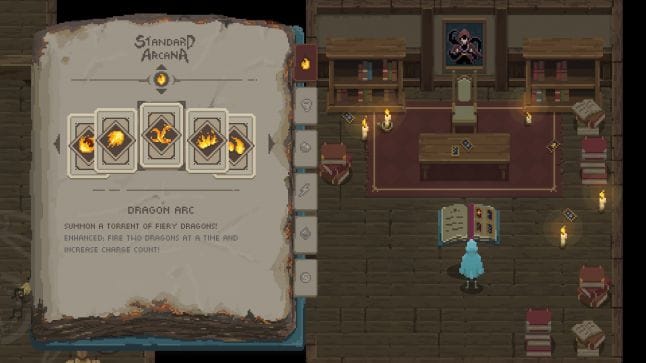
“For example, Seismic Entry, which has high mobility and a period of invulnerability, would be considered a combo opener that allows the player to initiate a string of spells by jumping into a group of enemies. Blazing Lariat, on the other hand, would be considered a combo ender with its sweeping effect and high knockback. Not all spells fall within these categories since we also cater to more passive playstyles, but we tried to keep the above in mind when designing spells and determining how they worked in combos in both single player and co-op situations.”
Many considerations would go into every spell that would eventually be accepted into Wizard of Legend, which is what helped shape its fast-paced combat and the various ways players could tackle it. This made the testing process a complicated one with many things to think about, but would result in tight play with a large variety of options that wouldn’t conflict with one another.
Spellshaping
That's not to say that every single spell in the game worked just how the developers liked it on the first go. Many spells would contain a piece of their final form, giving Lee an idea that he liked that would need careful shaping in order to craft a viable spell for Wizard of Legend.
Lee recalls the creation of the Air Arcana as an example of a spell that took some work to get right according to their rule set.
“While a few of our spells got an instant pass during prototyping because they just felt awesome, most of them took some tuning to get them to where they are," says Lee. "In particular, many of our basic type arcana - spells that have no cooldown and are used to help chain other spells together - underwent many changes before we were okay with adding them to the game. One of our more popular basic arcana, the Air Spinner, went through quite a few revisions before we were done with it."
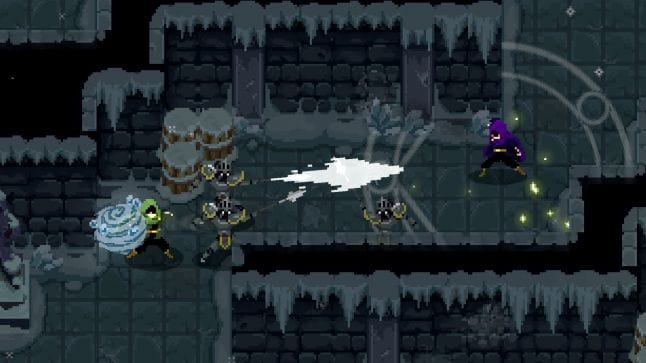
“While we had very few rules as to how a normal spell should behave, we had much stricter limits on the characteristics that a basic arcana should have: very limited directional range, hit multiple times, very low damage overall, no cooldown. With each basic arcana, we tried to break these rules in interesting ways,” he continues.
“With the Air Spinners, we wanted to remove the directional aim requirement to have a basic that just attacked in all directions at once. So, in its first iteration, this basic was an explosive flame blast that attacked in all directions immediately at the cost of a very low range and very low damage. We quickly realized this wasn’t very fun to play with as it required no effort from the player in most cases where it was useful and was very ineffective in a large majority of cases.”
"While we had very few rules as to how a normal spell should behave, we had much stricter limits on the characteristics that a basic arcana should have...[and] with each basic arcana, we tried to break these rules in interesting ways."
The Air Spinners, in the first conceived form, weren't even a wind spell yet. They started off as a fire effect that behaves in a certain way, but it was far too effective at just blasting foes with little input from the player, resulting in a dull, overpowered means of battling through the game. While functional, it didn’t offer any excitement for the game, but seemed to have some ideas that would work in another way.
“We still liked the idea of an omni-directional basic and, after many iterations, decided on a type of projectile that would swing around the player to cover all directions, but would hit twice if the player aimed it correctly. This let us give it a bit more leeway in terms of range, as it was still beneficial to aim the basic, and it also let us achieve the goal
No tags.