
The brief, tantalizing teaser we got of Visceral Games' AAA single-player Star Wars project that was shown at the EAPLAY event last year (watch it above, or click here if the embed isn't working for you) may be the last that we see of the game as it was initially conceived.
EA announced on Tuesday that they were taking the hotly anticipated game in a different direction, and closing Visceral. "In its current form, [the game] was shaping up to be a story-based, linear adventure game," read the statement from EA.
The announcement went on to say that development of the game will continue elsewhere, but it's reasonable to assume that whatever the final product is, it won't be a story-based, linear adventure game.
The reactions to the announcement were swift ... and dark. This terrible news about a well-loved studio and a hotly anticipated game was just the latest piece of bad news about the market for big budget games that were focused on a single-player experience.
Think pieces proliferated about the grim future for AAA single-player experiences. They had a lot of other evidence to point to--recent releases like Resident Evil 7, Prey, Dishonored 2, and Deus Ex: Mankind Divided, which were critically acclaimed but which underperformed saleswise, had many speculating that the increasing cost of high end game development may mean that the only viable way to be profitable is to adopt the live, constantly updated, game-as-a-service model of titles like Overwatch and Destiny 2 and Star Wars Battlefront 2.
Gamasutra staffers were engaging in similar conversations, and we decided to hash it all out in an email thread. Is the Visceral announcement a death knell for AAA single-player games? Or is it simply a terrible tragedy for the talented Visceral staffers who don't end up finding positions elsewhere within EA? Here are our impressions.
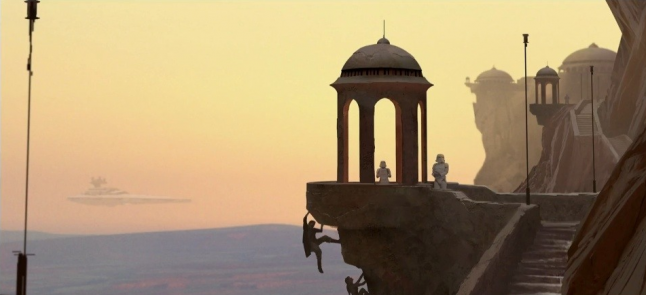
Visceral Games' AAA single-player Star Wars project
Bryant Francis (@RBryant2012), contributing editor: Okay so this is one of those weird places where the art of making games and the business of making games are colliding and because of that everyone says story-driven single player games are dead. Weird, didn’t I write about this like…last year? (And others a few years before that?)
First off, I think Visceral’s demise really sucks. Mid-development market shifts happen, but the company seems to have been left hanging out to dry at the expense of getting an exclusive Star Wars license for the publisher as a whole.
EA wants the development community and its players to not think of it as “the worst company in America” anymore, but this year it’s doing the same things that landed it on that Consumerist list. Murky microtransactions, studio shuttering…whatever was going on with Visceral’s Star Wars project, a full studio closure feels like a management crisis where the employees working on the project will suffer most.
"If there’s one key lesson I think I can see in Visceral’s demise, it’s that multiplayer games and 'live games' ranging from Destiny 2 to Overwatch are absorbing narrative design elements with microtransactions and neverending worlds.' This means that players are, to some extent, getting satisfying single-player-like experiences out of these games."
What we’re seeing this Fall isn’t the death of single-player games but once again companies grappling with that weird tipping point where producing a linear single-player game requires a level of polish and staff size that further mandates exorbitant game sales.
Visceral’s death, barring further reporting, sounds a lot like LucasArts’, in that a linear Star Wars game expected to have triple-A polish and a big vision stumbled into huge costs and a shifting ship date, while competitors were running around making millions off multiplayer games.
I think this also applies to Arkane Studios and Resident Evil 7, though I’ll quickly point out Doom had a multiplayer mode too, which Bethesda must have expected to help lift sales. (Wonder if it would have been a cheaper game without it)
(And I’ll believe these weak sales are bad for Arkane when Bethesda actually does something to the company…I hope they don’t!)
In a way, I can understand why EA management canned the project then, since I’m sure it wasn’t in a state where it could exist as a “live game” very easily, and a publicly traded company like EA is looking for the largest profits out of the largest games….which are currently live online games. I don’t see a world where a single-player Star Wars multiplatform game would have hit that, even with the license.
This probably means large companies like EA won’t be investing in linear action-adventure type things any time soon. Those that do will probably do so with some kind of console exclusive deal tied to it (Horizon Zero Dawn, Uncharted), or will do so at the cost of exorbitant crunch.
But smaller companies seem to be picking up the slack! Nier: Automata helped Platinum Games regain its footing this year. Hellblade outperformed expectations. I’d add companies like Supergiant Games and its release of Pyre, but by that point we might be entering a different genre of game.
If there’s one key lesson I think I can see in Visceral’s demise, it’s a point Tom Abernathy brought up when I was talking to him in 2016. Now more than ever, multiplayer games and “live games” ranging from Destiny 2 to Overwatch are absorbing narrative design elements with microtransactions and “neverending worlds.”
This means that players are, to some extent, getting satisfying single-player-like experiences out of these games. That may not mean seeing a satisfying story to its conclusion, but it may mean enough funny lines from Cayde-6 while adventuring with friends is enough to satisfy audiences who once would have tried a new Uncharted-like en masse.
Game writers and narrative game designers may be shaking in their boots a bit after this year’s events, but I think it’s possible to be clear-eyed about single-player games without saying the sky is falling. Multiplayer games are experimenting with elements previously seen in single-player experiences, and smaller companies are going all-in on solitary adventures and doing well for it (Darkest Dungeon: Crimson Court, Griftlands, maybe Hob?).
If your goal in life was to make another Uncharted, you…might want to just go work at Naughty Dog, but if you’re a developer aiming to make great story-driven experiences, I think the market is still supporting that, just maybe not in the way you expected.
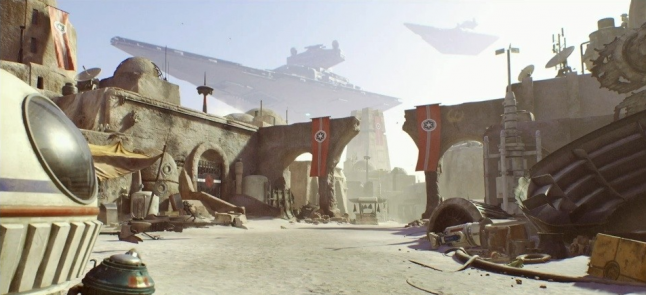
Visceral Games' AAA single-player Star Wars project
Kris Graft (@krisgraft), editor-in-chief: HELLO.
So it seems that this conversation about the commercial viability of linear, single-player action-adventure games comes along every other year, usually spurred by a significant game’s cancellation, or revelation of its poor sales.
I don’t necessarily think that triple-A single-player story-driven aka linear games are doomed, no. There are some traits of these types of games that make them inherently risky—they demand huge production costs, and their replayability and longevity is limited, in particular. But for every trait that makes these types of games risky, you can find a corresponding trait in other genres that make them risky as well. There have been plenty of multiplayer games that just fizzle out.
"These studios are set up for failure from the start. Seriously, you can sell 4 million units and still be a failure."
Someone at EA looked at the numbers, analyzed the market, took a good look at Visceral’s Star Wars game, and decided to cut its losses and move in a different direction. It was a decision made for that specific game.
In other words, this is and always will be a budget issue—they just weren’t confident they could get the return on investment needed to make this game make sense in the current market, and unfortunately the future of that studio was tied directly with that game.
It’s such a crapshoot, honestly, just like every other facet of the video game business, whether talking about indie or triple-A. I’d be careful extrapolating the demise or success of one game and apply that across an entire genre or market. If you follow that mindset, there’d be nothing but Steam Early Access survival and battle royale games.
That said, in the case of Visceral and other companies that have found themselves in that position, these studios are set up for failure from the start. Seriously, you can sell 4 million units and still be a failure. Expectations placed on these studios are sometimes just ridiculous. So now we have microtransactions proliferating in $60 games.
I’m not totally against that, depending on how they’re implemented, but they sure seem like afterthoughts sometimes, and when the financial success of these big games start to rely on heavy monetization, it resembles a band-aid on a gaping chest wound.
So what’s the solution? Scope and budget for game dev and marketing flawlessly, understand every tiny detail of the market and submarket you’re entering, execute the game perfectly, and make sure that players leave enough hours in the day to play your game after Destiny 2, Overwatch, and/or PUBG. IT’S JUST THAT EASY.
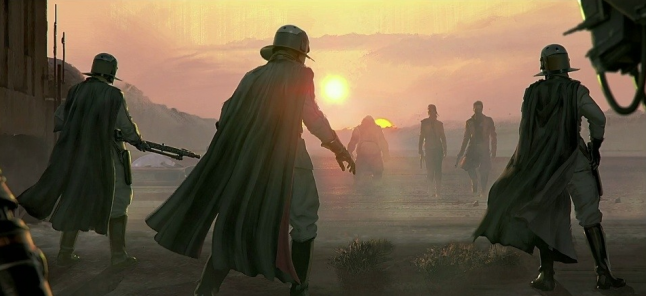
Visceral Games' AAA single-player Star Wars project
Chris Kerr (@kerrblimey), news reporter: WORDS FOR ALL!
Am I surprised by what's happened? Yes and no. I had a lot of faith that the Visceral project would come good, partly because of the involvement of Amy Hennig, and partly because I'd drop a small fortune on an
No tags.