
Deep Dive is an ongoing Gamasutra series with the goal of shedding light on specific design, art, or technical features within a video game, in order to show how seemingly simple, fundamental design decisions aren't really that simple at all.
Check out earlier installments, including creating believable crowds in Planet Coaster, the challenge of creating a VR FPS in Space Pirate Trainer, and designing dynamic audio for destructible environments in Rainbow Six: Siege.
Who: Moritz Wagner, Lead Designer at Mimimi Productions
I’m Moritz, lead designer at Mimimi Productions. I’ve been working here since the early core of our studio emerged from our Game Design studies at the Media Design Hochschule in Munich. During our third semester we started developing early prototypes of our first big game game The Last Tinker: City of Colors, which we got to make after Mimimi was founded in 2011. Aside from that we have been working on several mobile titles.
Currently we are 16 people and our latest release is Shadow Tactics: Blades of the Shogun, a real time tactical stealth game (RTT) played from an isometric view in the vein of the Commandos and Desperados series.
What: Dynamic Detection in Shadow Tactics
In Shadow Tactics players control a squad of up to five different specialist characters to sneak and stealth-kill their way through large maps filled with enemy setups. These function as puzzles with multiple solutions.One of the most important tools the player has is the ability to display enemy vision in the form of a cone that we call Viewcones. The Viewcone has different colored areas that determine its behavior (more on that later).
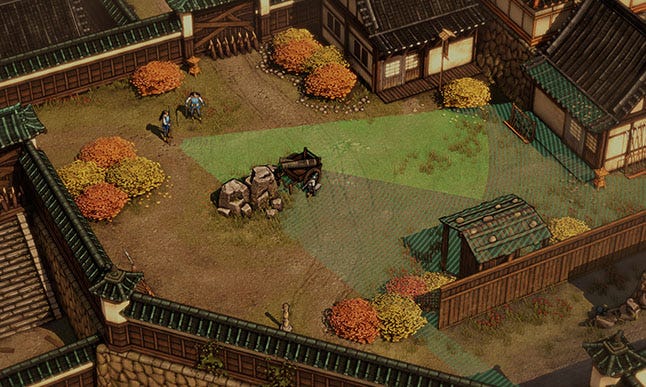
Figure 1: The Viewcone in Shadow Tactics, a thing of beauty.
For those of you who are interested in how this works technically lets me quote the man who built it, Frieder Mielke, our Tech Lead: “The basic principle behind the Viewcone calculations is shadow mapping. We first render a depth texture from the eye position of a selected character. When rendering the main camera we generate a mask that holds information for the various vision areas based in the previously generated depth texture (e.g. "full vision", "fully occluded", "crouch distance", "out of bound"). Using this mask we can color the Viewcone in a final full screen pass, where stencil buffer is used to exclude various objects from being rendered to and to add lightsource information.”
From a design standpoint we analyzed how these Viewcones were used in the old games and decided on where we wanted to improve it. This also lead us to re-thinking some aspects of player detection in the genre.
Why?
As many people do we defined a couple of design pillars for Shadow Tactics. Two of them are relevant when talking about Viewcones.
Keep the core loop intact: Commandos gameplay is still as fun today as it was 16 years ago. It is crucial that no matter which decisions we make this strong core stays intact. Shadow Tactics should create the same joy (read: incredible pain followed by satisfaction) these games did.
Improved Usability: While the gameplay is still fun, usability for these old games didn’t age quite that well (surprise!). Controls feel clunky, often there is lacking feedback and important information is not clearly communicated to the player. Shadow Tactics should feel like a modern version of the old RTT games.
Some Viewcone Basics
Since the Viewcone displays enemy vision it is used to determine the space in a level the player can navigate through and interact in. Enemy setups can consist of up to four different types of space:
No Viewcone: Not hard to guess, in these areas players are mostly free to do as they please. They are typically where guards meet their untimely death. Players can either create them by using distractions, or enemies can be lured into them. Particularly reckless guards just walk through them on their own.
Dark Green Viewcone: Here players need to stay crouched to stay undetected. Any action that would cause their characters to stand up will cause problems. They are easy to traverse but killing guards is usually not possible here without a distraction.
Bright Green Viewcone: These areas are off limits. Depending on the chosen difficulty players can try to sprint through them fast enough without getting detected, but it is almost impossible to perform any actions here without getting into trouble.
Dotted Viewcone: These are used for bushes or high grass. Here player characters are always invisible while crawling unless an enemy actually enters the bushes (which they always announce with a voice line and only do when lured in there or searching for the player). We felt that this sort of “hard cover” was something that wasn’t used to its full potential in the old games and adding it allowed us to create a satisfying pace of feeling save inside bushes and being at risk while operating in the other areas.
The Viewcone is the single most important factor for designing enemy encounters in Shadow Tactics. Some guards move on patrol-paths, which means that usually these spaces change their state depending on timing. This is pretty basic, but I wanted to get it out of the way first.
Look at how our Viewcone looks
No gradients or fancy stuff, but sharp edges and clearly defined areas are important when trying to play around the Viewcone in a pixel perfect fashion.
The Viewcone’s size mainly affects immersion, difficulty and level design.
At its core this feature can create immersion breaking situations that often are part of stealth games and thus partially accepted by the audience. Still it was important to not push it too far. While it is clear why an enemy can’t see a player character that’s crouching ten feet away from them when looking at their Viewcone, it still feels unnatural and stupid. We have all been there.
Larger Viewcones made this less of a problem. The closer you can get to your enemies without being seen, the more it feels like a gamey mechanic and can break immersion. Still having too large cones has a big impact on difficulty, level design and map size, so it took some time to find a sweet spot here.
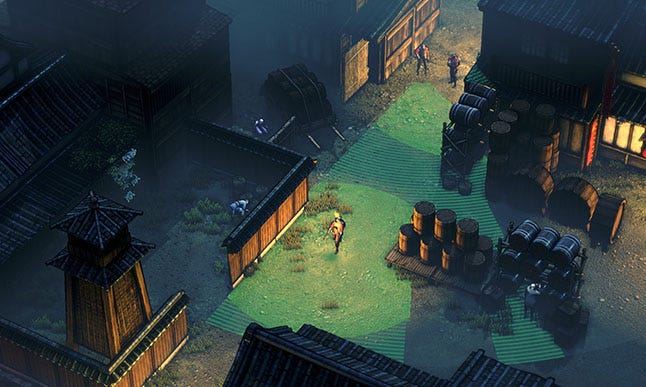
Figure 2: Night-levels use different Viewcone settings. Cones are smaller, the dark green area is very large, but light always creates a bright green area.
Consistency is also an important factor. We decided that all enemy guards should have the same cone size, movement angles and speed. Viewcones are only static in specific situations (like guards talking to each other). This way players can rely on how a cone will behave and can build on that foundation throughout the game without being surprised by a Viewcone suddenly behaving differently. They get better at using the feature to their advantage, which is a satisfying feeling. We also chose to keep this consistent between difficulties, so players who might start out on an easy don’t have to relearn core concepts like this when moving to a higher difficulty.
Now attentive readers might say: “But Moritz, you said there was no fancy stuff in the Viewcones. What about that incredibly fancy pattern in the dark part?” Let me explain! The reason for this is that as soon as the direct contrast with the bright area next to the dark area doesn’t exist, it becomes hard to see which color it actually is. This happens on high ground and if parts of the Viewcone get occluded by large objects or cover.
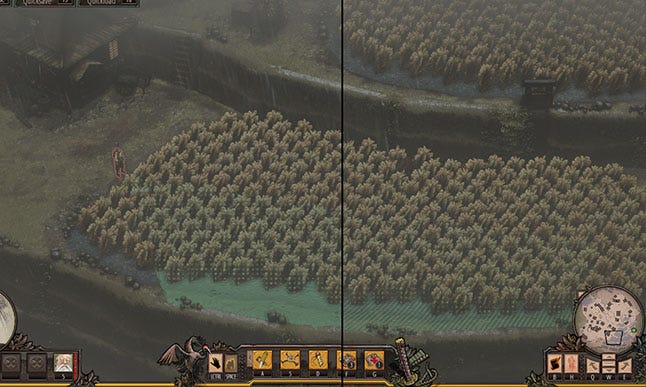
Figure 3: In the left picture I deactivated the pattern. This shows how hard it is to guess if the Viewcone is dark or bright. With the pattern turned on in the right picture it is clear.
One Viewcone to rule them all
Just like in the old RTT games we decided to only allow one Viewcone to be displayed at a time.
From a design standpoint there are two main reasons for this:
Information: Shadow Tactics is a game of almost perfect information. There is no fog of war, enemies don’t randomly spawn and their behavior is always predictable (as long as they aren’t actively searching for the player). Players can analyze a situation completely if they take the time to do so. Only seeing one Viewcone is the single half-hidden information when solving problems. Forcing players to memorize vision of guards beyond the first creates tension and makes the gameplay of working around Viewcones more intriguing.
No tags.