
The following excerpt is a chapter of "Game Engine Black Book: Wolfenstein 3D", an in-depth examination of the history, code, and development of id Software's influential Nazi-killing first-person shooter.
This chapter reflects on the game's origins and how it was built atop the success and tech of id's Commander Keen, itself created out of the bones of a failed attempt to sell Nintendo on a Mario 3 PC port.
Created by author and programmer Fabien Sanglard, the full book is now available in both physical and digital editions.
In 1990 a small company based in Shreveport, Louisiana was doing well in the shareware market.
As a video game subscription service, Softdisk produced and mailed new games every month to its members. Business was good but some of its employees had other ambitions.
They thought they had the skills to make it big and they wanted to prove it. They had created a new way to program side scrolling. They called the technology "adaptive tile refresh" and it enabled hardware scrolling on a PC capable of rivaling a NES. In early 1990 they worked non-stop over a weekend to reimplement Super Mario 3 on a PC and demonstrate their skills to Nintendo.
The team was successful in building a clone of Mario, but unfortunately "Ideas from the Deep" as they called themselves failed to convince Nintendo to give them a contract. As impressed as they were, the Japanese firm wanted the Mario series to remain exclusive to Nintendo consoles.
“We sent this demo to Nintendo of America, they in turn sent it to Kyoto to the mothership office, and the execs there saw the demo and were really im pressed. However, they didn’t want their intellectual property on anything but their own hardware, so they told us Good Job and You Can’t Do This."
- John Romero, programmer
.PNG/?width=700&auto=webp&quality=80&disable=upscale) This episode was enough to convince them they had not only the talent to feed their ambitions, but also the teamwork and work ethic to potentially go all the way. In February 1991 four Softdisk employees took the leap of faith and founded their own company: "id Software".
This episode was enough to convince them they had not only the talent to feed their ambitions, but also the teamwork and work ethic to potentially go all the way. In February 1991 four Softdisk employees took the leap of faith and founded their own company: "id Software".
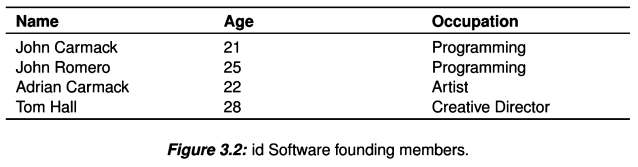
(For ample details, read "Masters of Doom" by David Kushner).
They immediately used the technology developed for "Mario 3 PC" to release their own titles and build their own intellectual property. Wasting no time, the team shipped no less than three titles annually.
• Commander Keen Episode 1, 2, and 3: Invasion of the Vorticons (December 14th,
1990)
• Commander Keen Episode 4, 5, and 6: Good Bye Galaxy (December 15th, 1991)
• Commander Keen standalone game: Aliens Ate My Baby Sitter (December 1991)
The games, published by FormGen, were instant successes and sold very well. They also kept on writing games for Softdisk to publish, most of which featured adaptive tile refresh:
• Commander Keen in Keen Dreams (1991)
• Dangerous Dave in the Haunted Mansion (1991)
• Rescue Rover (1991)
• Rescue Rover 2 (1991)
• Shadow Knights (1991)
• Hovertank 3D (April, 1991).
• Catacomb 3D: A New Dimension (November, 1991)
During Spring of 1991 the next generation of id Software technology started to surface. Hovertank 3D placed the player inside a tank. There was no texture mapping yet and the pace was quite slow. Catacomb 3D marked the introduction of textures and took immersion one step further by placing the player in control of a magician in first person view.
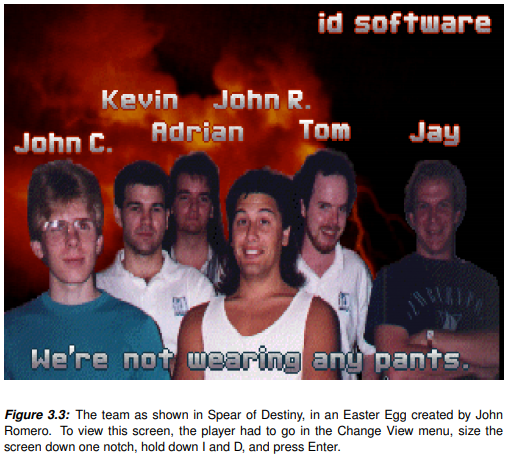
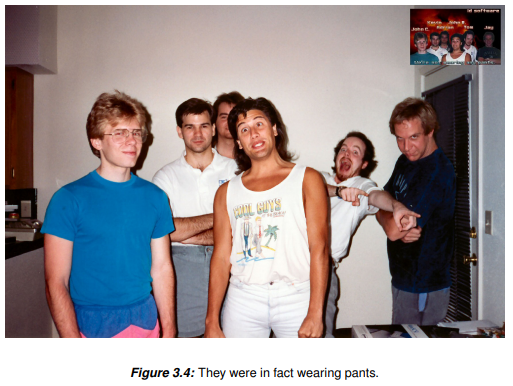
In November 1991, the team was free from any obligations to SoftDisk. Their next game was going to feature the 3D technology they were building and would be called Wolfenstein 3D. Given the magnitude and ambition of the title, four more people were added to the team for a total of eight.

"Jason was part of id at the start, but we parted ways during Wolf development."
- John Carmack, programmer
Organization
In September 1991, following Tom and Jason’s high-school memories of the area, the team relocated from Shreveport, LA to Madison, WI. They established their office in a two story brick building at The Pines apartment complex, 2622 High Ridge Trail. They all lived in walking distance of the office except for John Carmack who, since he did not care, inhabited the second floor of the apartment.
The development of Wolfenstein 3D started in January 1992. As temperatures fell and snow dumped from the sky, the team kept itself increasingly busy and barely left the office. Development lasted four months and Wolfenstein 3D
No tags.