
“We use every tool we can to explain what’s happening: you can watch individual people perform their jobs and transport resources, you get high level advice from the adviser system, you can see low level info on specific buildings, and you can get city level summaries on your resource flows. The more the player can learn just by poking around, the better they can self-guide.”
Turning a small hamlet into a sprawling city, defended from Viking and dragon attacks by high walls and smart defenses, can be a daunting task for any budding Medieval city planner. Doing so while keeping the populace happy and healthy can be even harder.
However, Pete Angstadt and Michael Peddicord, developers of city builder Kingdoms and Castles, wanted to teach players how to do just that without going through a tutorial, tasking them with complex tasks and goals without formal instruction.
Instead, the developers sought to coax the player along, offering them structures with clear purposes, carefully directed problems, and a designed flow of building needs that would teach them what they needed to know without stopping for direct instruction. In doing so, they could teach players about city building without the player knowing they were being taught.
“The game doesn't have a formal tutorial, so, we try to make everything as obvious and accessible as possible.” says Peddicord.
Teaching with towers
"The game starts with two basic problems that need to be solved: homelessness and hunger."
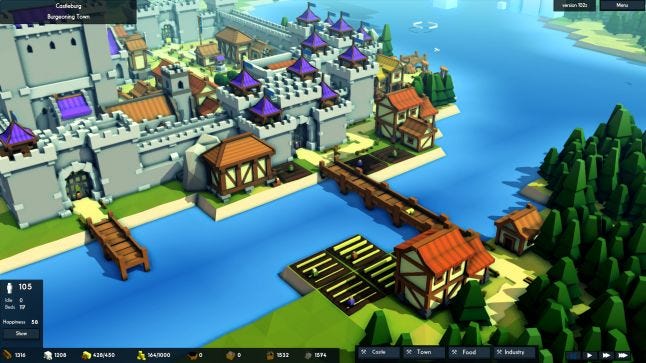
Kingdoms and Castles begins its city building instruction very early by starting the player off with only two issues, allowing them the time to examine these problems and take a look at the tools they have to solve them.
“The game starts with two basic problems that need to be solved: homelessness and hunger," says Peddicord. "Very early players learn how to solve these problems in Kingdoms and Castles.”
Players begin a game with a small keep, and some people without any place to live and with little in the way of food. These problems will form a major backbone of the game over time, but they will be joined by other issues, such as attacks and emotional needs, eventually creating a juggling act between all of the difficulties players can suffer from.
However, starting with only two balls allows players the time needed to learn what they need to keep the act going, and learn about the tools Kingdoms and Castles offers to solve their problems.
“Buildings are generally designed to fill a specific need, and we tried to keep a building’s purpose simple.” says Peddicord. Using these simple, clear building descriptions would allow players to immediately see what a building’s use would be, and how it can be placed to deal with the problem at hand.
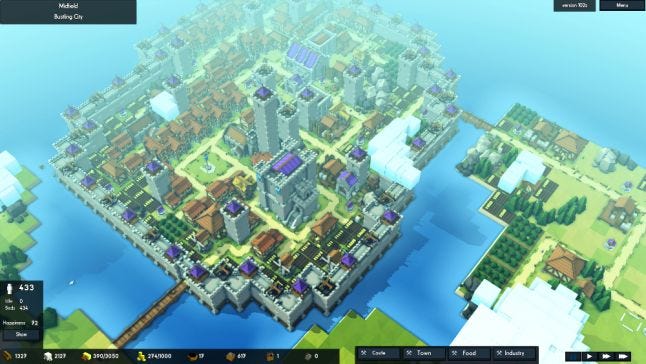
Should players not immediately pick up on the issues their town is having, though, the developers have also added some handy advisors to offer hints on what they should be focusing on.
Talking to these characters will offer the player some advice on how to proceed, helping limit them in what they should be looking for when peeking in on the structures they can build. This helps narrow the player’s focus when they might otherwise get lost in all of the structures they can use, ensuring builders find their feet.
All of this has been done so far without pointing out a tutorial, instead using clear language from advisors and building descriptions to help the player find the game’s unspoken tutorial. Peddicord says that the game's main ‘tutorial loop’ now is:
Listen to the advisors.
Find the building that satisfies their suggestions by readings building descriptions in the build menu.
Satisfy the building requirements and build the building.
See what happens.
Educational resources
Resources are a further teaching tool, helping limit the player’s building options to keep them from being overwhelmed by the game’s many structures, and also showing the player just how resources are uniquely handled in Kingdoms and Castles.
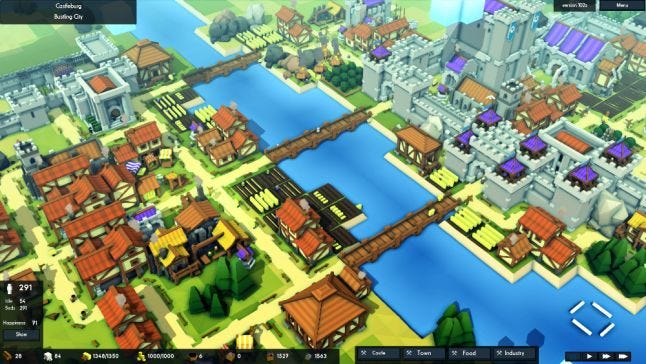
"The player is gated in what they can build using resource costs. When you start the game, you only have access to wood and you can only build things that cost only wood. "
“The player is gated in what they can build using resource costs," says Angstadt. "For example, when you start the game, you only have access to wood and you can only build things that cost only wood."
"The amount of stuff you can do is fairly limited, and a natural goal is to work towards getting access to stone. After that you’re gated by gold. As your population grows and you have access to more buildings, we enable things like plague and Vikings, which pushes you towards building ways to deal with them.”
Players really only have access to wood for a little while, which forces them to look at structures that can only use wood as they begin.
This naturally guides them toward building things that resolve problems like homelessness and hunger, again helping them deal with those first two issues. Not only this, but natural curiosity will be piqued by seeing the new structures that can be built out of stone and other further materials. The player can see them all, and can be intrigued by the new possibilities, encouraging them to branch out once they have their initial issues dealt with.
Players also learn here that all goods need to be physically transported, which is done through the game necessitating that most structures need to be connected to one another with roads. “We enforce connected roads and require that new buildings are constructed in their vicinity.” says Peddicord.
“We experimented with giving the player total free placement of buildings but the resulting cities were too packed and didn’t allow the citizens to transfer resources efficiently. It also seems to be more aesthetically pleasing.”
No tags.