Written by Tanya X. Short, the Captain of Kitfox Games, a small independent games studio in Montreal currently working on Boyfriend Dungeon and BadCupid.
This is the 2nd part of a series. Click here to read part 1, introducing the idea of creative management practice as learning how to pitch to your team.
“How can I improve as a creative director?”
I used to hate the idea of practicing creative direction or management, because whenever I started wondering how I could improve, it seemed like I was threading a needle between two bad places: micromanagement and lack of direction.
And I do think it’s helpful to get a general, high-level idea of your current effectiveness, by asking questions like:
How many other humans understand why I’m making this?
Does my team seem excited and challenged?
Is my team’s personal expertise showcased in the project?
Does every team member understand and support the project goal’s?
But the binary thinking of “good” versus “bad” direction is not particularly helpful, and can actually create a lot of insecurity and neuroticism.
Style Strengths
We’re all more complex than a simple binary, and with a little bit of introspection, we can dive deeper into the details of what makes our personal creative direction more or less effective, so a more representative spectrum of analysis would look more like this:

With each Kitfox project, I’ve learned a bit more about creative leadership, and it’s shown in improved results for each game, with a progressively tighter, more focused and interesting player experience.
From Shattered Planet, I learned the importance of answering why and for whom a game needed to exist. (I.e. for this project, I had no idea) It was called “a very good roguelike” in The New Yorker, which I’m proud of, but left us wanting to make a game with more purpose.
From Moon Hunters, I learned the importance of strategic design delegation, and that my personal values could resonate with the team & the game audience. It won many awards, was on the cover of at least 1 magazine, and continues to sell well, but with a core team shift and multiple project management mistakes, my main pride in the project continues to be that underneath it all, it reflects things I believe and continue to be fascinated by.
From The Shrouded Isle, well, I wasn’t the creative director, but from Jongwoo and Erica, I experienced first-hand the power of a truly distinctive art style and boldly ludo-narrative-congruent play experience. It was our first Eurogamer “Recommended” review, with a two-page spread in Edgemagazine.
And of course I continue to pour my heart and mind into Boyfriend Dungeon, which is our highest-potential game yet, but I’m not going to jinx it by getting ahead of myself. Ahem.
My point is that over each game, I discovered an aspect of myself that I could work on, in order to improve the results (or, the likely results) from my team.
Self-Improvement
Since our ultimate goal is to make better, more efficient, (etc) games, it’s tempting to focus on goals like:
higher game quality
better team work ethic
stronger innovation
better-defined scope
But ultimately, those things aren’t in your direct control. As a leader, your primary goal is to create a stronger team, who creates better results, and all you really have control over is yourself.
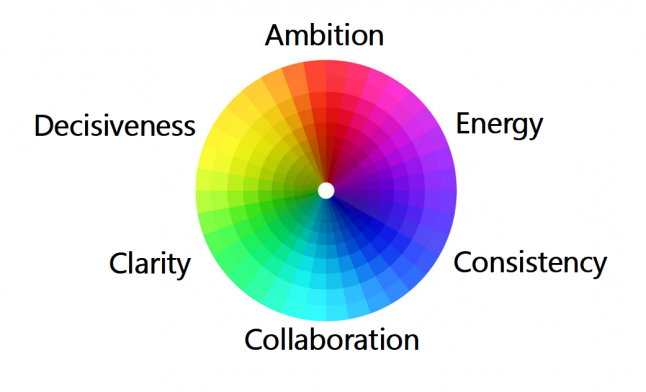
So, after thinking long and hard about what I look up to in leaders I’ve had in the past, these are the top 6 style strengths I try to work on as a creative leader, with varying levels of success:
 Brief explanation of my thinking for each:
Ambition: the drive and vision to demand the appropriate output from each team member. It can be tempting to scold your team over the quality of the project, when really it’s possible you should scold yourself over not having the appropriate Ambition. With each game Kitfox makes, I try to raise our collective level of ambition for the project, as art and as a product.
Energy: a positive attitude that can make work as a team exciting, enjoyable, and optimistic. It can be tempting to worry about your team’s work ethic, but you can’t control that — you CAN control what emotional impact you have on them, when you are nearby.
Consistency: self-control and discipline in communication over time, which wastes less of the team’s time changing directions. Obviously direction should solidify and cohere over time, but ideally it wouldn’t wander or backtrack too often. It’s more productive to work on my consistency, rather than try to increase my level of control.
Collaboration: an ability to work well with the different team personalities, and together create something we couldn’t alone. It’s something I can work on within myself, rather than feel helpless when there’s a lack of creativity or fresh ideas coming from the team.
Clarity: communicating with utmost accuracy and efficacy, at its extreme as if the team could read my mind.
Decisiveness: a tool that supports higher clarity and energy, since team members don’t have to be blocked by me. In an ideal world, I wouldn’t agonize for days over something unless that time was truly warranted.
Example self-analysis: By my nature, I’m fairly high in energy and decisiveness, but those two naturally undermine my consistency and clarity sometimes, since I get so excited about something I change direction and disrupt everything on a whim. And it can be difficult to be extremely visionary-level ambitious when really, it’s more comfortable to be supportive and let people (to some degree) define their own “best”. I’m honestly often too tempted by novelty, so I often need to buckle down with discipline to see things through to the end.
No tags.