

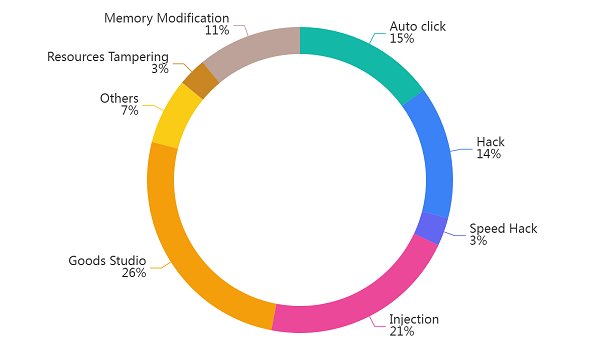
According to JikGuard’s own data, memory modification accounts for roughly 11% of the security threats games face. The attack itself is simple in principle: gain elevated privileges, then point a memory editor at the game and rewrite its values on the fly.
At its core, a memory editor is a cheat tool — off-the-shelf or custom-built — that can search through and overwrite a process’s memory. These tools come in countless variants and turn up on practically every platform. In this post, we’ll walk through real-world examples of the most common memory editors and lay out how to defend against them.
GameGuardian
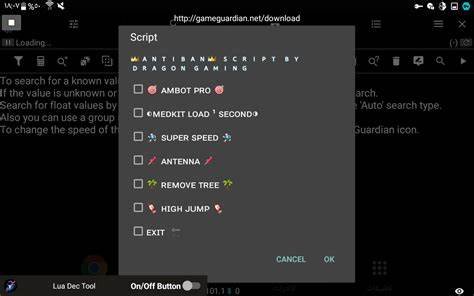
GameGuardian offers hands-on memory searching and editing. In the demo below, repeated searches on a game’s coin value gradually narrow down the exact memory address; rewriting that address delivers unlimited coins.

GameGuardian also supports scripting. A script can locate and modify memory automatically, turning a manual exploit into a one-tap crack — and these scripts are one of the main channels through which game cheats spread.
Cheat Engine
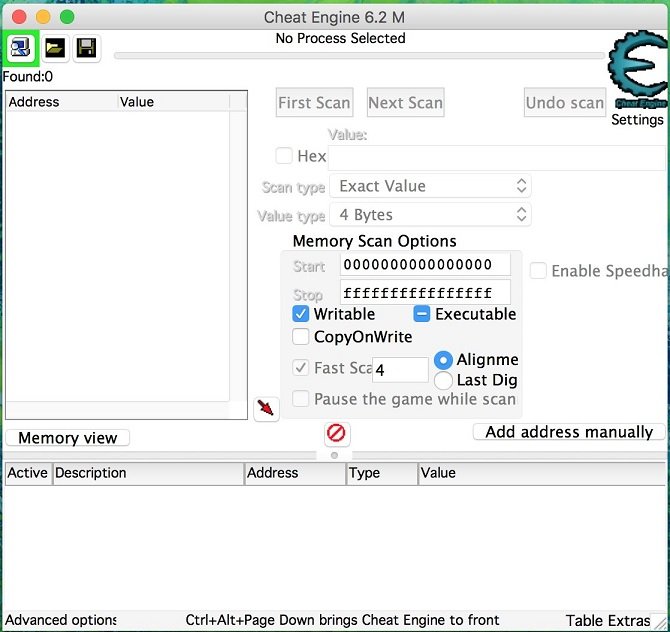
Cheat Engine is a powerful memory editor for Windows games. It scans game memory and lets users modify and lock values, and it ships with a full toolkit besides: a debugger, disassembler, assembler, speed hack, and system inspection utilities.
Memory scanning is Cheat Engine’s bread and butter. Through repeated searches it pins down a target address, then edits or locks the value to assemble a working cheat.
JikGuard has observed cheaters using Cheat Engine against mobile games running inside PC emulators, then packaging and selling the resulting hacks. This kind of cross-layer cheating slips past traditional detection and makes investigation considerably harder.
Compared with mobile, the PC environment is far more permissive. Paired with other tools, Cheat Engine can debug and analyze a game while keeping itself well hidden.
To address the memory-modification threats games face, JikGuard has built a dedicated countermeasure strategy. It’s already integrated into a number of popular titles, where it has proven its protective strength.
Anti–Memory Modification
To counter memory tampering, JikGuard developed a behavior-based detection approach that pinpoints modification activity with precision — neutralizing memory editors and their variants across the board for genuinely effective protection.
Security Environment Detection
Using low-level detection techniques, JikGuard accurately identifies the environment a game is running in — jailbroken or rooted devices, virtual machines, virtual frameworks, cloud phones, and more — and applies a tailored crash strategy for each.